
Introduction
In 2015, Mayo Clinic’s Division of Media Support Services was charged with implementing an institution-wide project to replace our existing Media on Demand system over the next two years. The scope of the project included all patient hospital rooms and common areas at Mayo locations in Arizona, Florida, and Minnesota, and all sites within the Mayo Clinic Health System (MCHS). A comprehensive User Experience (UX) research project was chartered in support of this project with three primary
goals:
- To provide educational content and tools that empower end users to manage their (or loved ones’) health conditions appropriately while reducing dependence on employees for assistance.
- To distract end users from a potentially difficult or stressful experience.
- To delight end users with a usage experience appropriate to a world-class health institution.
An interdisciplinary team of experts from Media Support Services, Patient Education and Nursing was charged with identifying opportunities and challenges the project will face, as well as validating user acceptance criteria for the system prior to implementation.
My Role
As the UX Team Lead, I guided a multidisciplinary team, coordinated efforts across departments, and managed stakeholder expectations. I spearheaded the strategic design and integration of the Intranet Services Unit with IT and Product teams, ensuring alignment with Mayo Clinic’s long-term goals. My responsibilities included conducting comprehensive research, developing prototypes, and leading iterative testing phases. The project resulted in significant improvements in patient satisfaction and system usability, and reduced support efforts for nursing staff. Throughout the project, I mentored junior UX researchers, led professional development sessions, and presented findings at national and international conferences.
Methodologies Used
Personas
Personas employ the use of fictitious characters to solve design problems from the perspective of a particular user or user type.
They are a central aspect of user-driven design methodology and allow the design team to better understand the needs of the user.
Patient Personas
- First-Timer/ Shipwrecked Patient – Unexpected admission after an outpatient visit with the additional stress of being unprepared for a hospital stay. Higher levels of stress because they don’t know what to expect.
- Acute/Urgent Patient – Emergency situations and uncertainty create an emotional burden for all.
- Challenging Patient – Psycho-social problems can lead to more difficulty communicating with care teams and a harder time coping with the hospital environment. May be overwhelmed and discouraged, and as a result have disengaged.
- Chronic Disease Patient – More experienced in the hospital and may want to be more involved in their care decisions. These patients tend to have less family around than acute or surgical patients.
Employee Personas
- Michelle, Inpatient Nurse: Responsible for helping patients with daily care activities, performing patient discharges and patient education, administering medication and any other activities as dictated by physician orders.
- Tonya, Therapist: Helps patients with chronic and acute injuries or conditions. Collaborates with other healthcare providers to develop a treatment plan that will help the patient gain strength (psychological/physical) to perform life activities, such as brushing his/her teeth or managing a personal schedule.
Interviews & Ethnographic Observation
We identified three populations of individuals representing the needs of the institution, staff involved in direct patient care and patients themselves. Our interview participants include representation from a large spectrum of departments and all three Mayo Clinic locations.
A separate interview protocol was developed and implemented for each population by a team of interviewers from the UX team. Interviews were conducted by teams of two with an interviewer lead, and a recorder/ethnographic observer visiting with each of the individuals identified.
A total of 83 interviews were conducted over a two-month period with 18 stakeholder, 29 gatekeeper, and 36 patient subjects with representation from each of Mayo’s three primary locations.
- Stakeholders – These are individuals with a vested interest in the overall success of the project and represent many diverse functional areas of Mayo Clinic. These groups may at times have business needs that conflict with each other, so the discovery and balancing of stakeholder requirements is crucial.
- Gatekeepers – Individuals represented by Employee Personas. Understanding the needs of employees providing direct patient care will be critical to project success. They possess a unique insight into how the end product should appear and function, and such are valuable collaborators on the project.
- Patients – Mayo Clinic’s patients (and by extension, their family members) are presumed to be the target users of the new MOD system, and it is their final perspective that will determine if we have met our goals of distract, delight and empower.
Surveys
User surveys are a primary means of collecting quantitative findings characterizing a user’s response to a system or product. Patient questionnaires were completed by a total of 24 patients from Rochester and Arizona, with plans to send more in the future.
Prototyping & Full-Scale Modeling
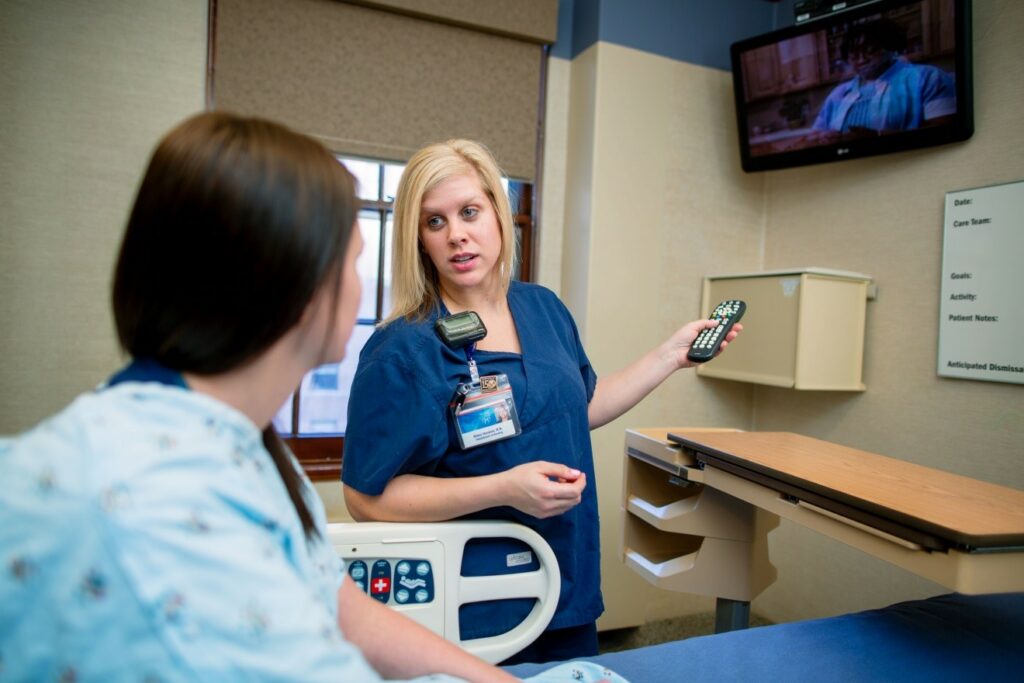
Understanding the complex interplay of the factors impacting the patient media experience is difficult without conducting direct observation of users as they interact with existing and proposed systems. We have constructed a full-scale model of a private hospital room in order to conduct observational and user acceptance tests of the television, audio and user interface systems selected by the larger project team.
The model is designed to allow investigation of television and audio equipment locations, mounting options, user interface
testing as well as potential sightline, glare and audio interference concerns. Our team also worked to develop a prototype of a simple
hospital grade remote designed to promote ease of use and reduce infection control concerns. This remote control design was adopted in late 2016.
Findings
Overall Impressions
The television and MOD system play a crucial role in patient experience, providing comfort and familiarity. Key findings included:
- Television serves as a vital source of control and distraction for patients.
- Music and relaxation programming positively impact patient outcomes and satisfaction.
- Nursing staff expressed the need for an intuitive and easy-to-use system to reduce their support burden.
Stakeholder Findings
Stakeholders emphasized the importance of improving patient satisfaction, reducing support efforts, and increasing patient education usage. They identified goals such as providing personalized content, tracking patient education compliance, and augmenting care delivery.
Gatekeeper Findings
Gatekeepers highlighted the impact of hospital media systems on patient experience, noting challenges with current system functionality and suggesting improvements in content accessibility, audio quality, and remote control usability.
Patient Findings
Patients valued the television as a source of relaxation and comfort. Surveys indicated a need for better content accessibility, audio control, and user-friendly remote controls. Patients also expressed interest in future functionalities such as video conferencing, ordering services, and environmental controls.
